

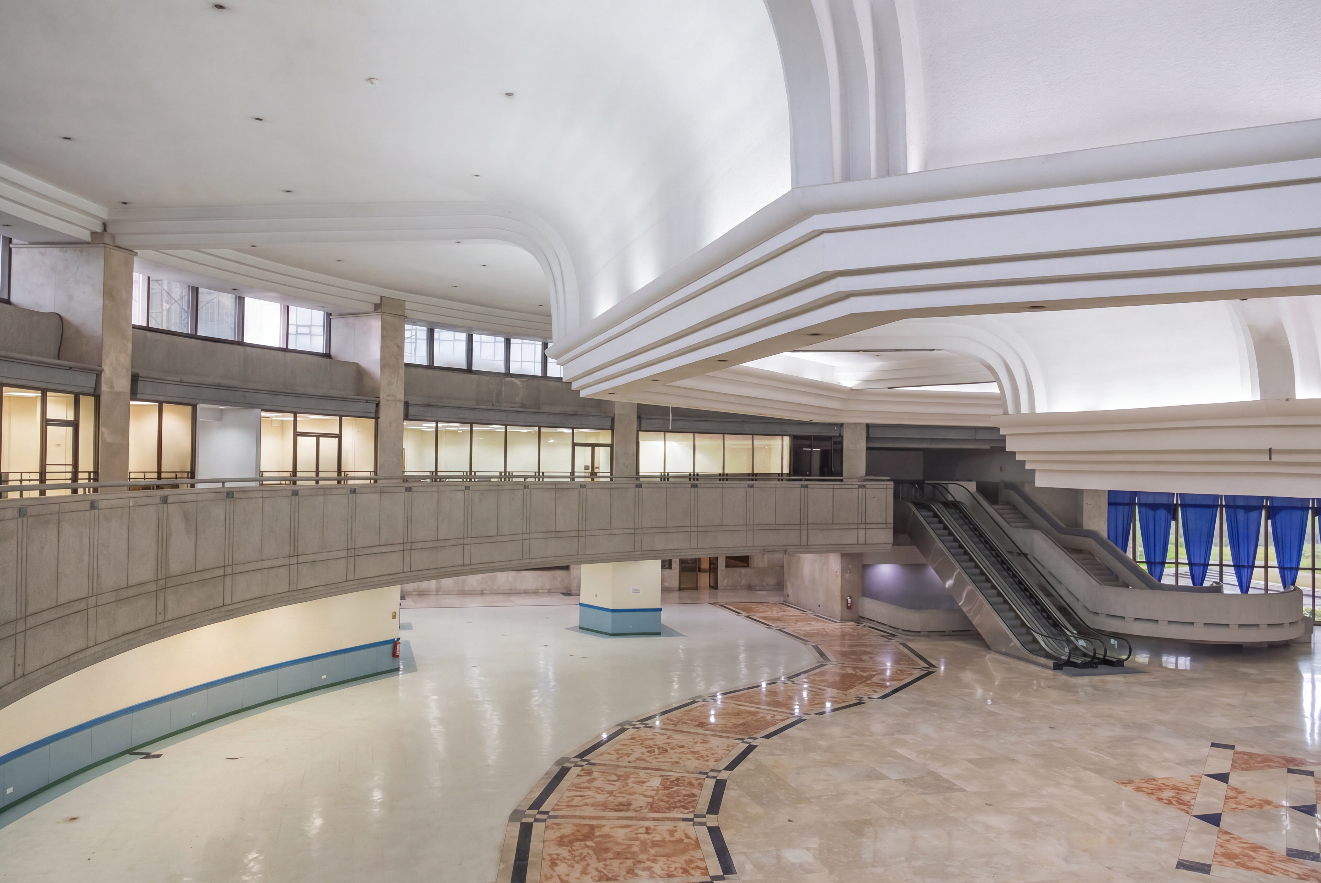
The PNB Financial Center enters a new era through adaptive reuse
Pasay is synonymous with movement.
On one end, there’s the continuous tides that echo the pull of Manila Bay. On another, bus terminals and transit hubs line the grid, each feeding the city’s restless movement.
To the south rises the country’s foremost airport, a gateway that rarely sleeps. To the west, the Cultural Center of the Philippines and the Philippine International Convention Center hold the line on performances and events. Painting the cultural skyline along with them are corporate headquarters, such as the PNB Financial Center.
These spaces are made to do more than stand still. They host, gather, and give people a reason to arrive and stay. Once defined by a single purpose, many of them have taken on greater roles through reuse and restoration.
Adaptive reuse keeps history vibrant, relevant
Across the Philippines, adaptive reuse is steadily gaining ground and becoming the response to the question of what to do with aging but still meaningful spaces.
Rather than replace them, developers now work with what already stands and upgrade systems while keeping the character intact.
There is a larger logic at play, one that folds into the goals of more sustainable cities. Reuse keeps places like Pasay from stretching too quickly. It holds activity in districts that already know how to move and intersect. In that way, it supports SDG 11 or Sustainable Cities and Communities as it keeps developments within reach instead of pushing them farther out.
It also shifts how materials are treated. While demolition clears space fast, it leaves behind heavy waste and requires new materials, energy, and systems to take its place. For retrofitting, it keeps much of what is already there, avoiding a large share of the carbon tied to new construction. Even when change is unavoidable, parts of the building can be pulled back into, kept in circulation rather than sent out as debris. It is a practical expression of SDG 12 or Responsible Consumption and Production.
Seen this way, adaptive restoration is viewed less as a trend and more as a correction. It keeps existing history vibrant and within reach.
The PNB Financial Center is now moving in that direction. What began as a place of finance is gradually unveiling itself within Pasay’s circuit of creative and event-driven spaces.
PNB Financial Center hosts new stories
Under the stewardship of LT Group’s real estate arm, PNB Holdings, the PNB Financial Center is beginning to welcome a different audience.
The change has not come through a dramatic overhaul. Instead, the building’s evolution has centered on working with what already exists. Embracing the vision of architect Gabriel Formoso, the landmark retains the bold concrete forms and generous volumes that have defined it for decades, while parts of the complex have been adapted for new uses.
Today, the PNB Financial Center continues to serve as the headquarters of the country’s first universal bank, but some of its spaces have taken on a second life as venues for meetings, exhibitions, celebrations, and corporate events. The building size, high ceilings, and open interiors lend themselves easily to gathering people together.
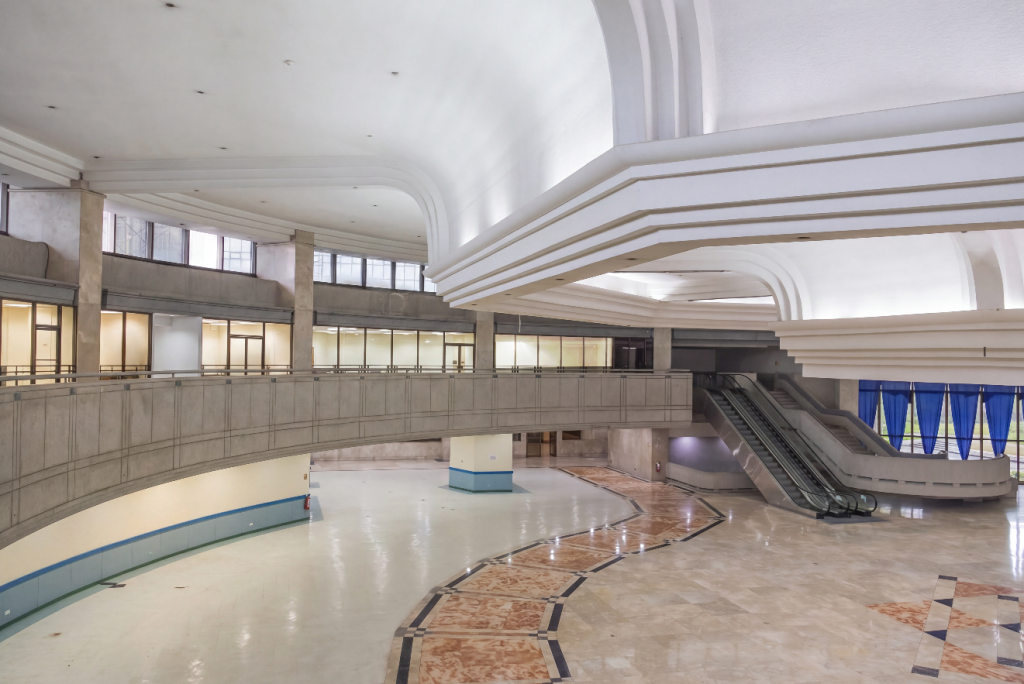
At the center of this transformation is The Grand Atrium. Once associated with the daily rhythm of airline and banking operations, it now functions as a flexible events venue. A wide marble floor stretches beneath an octagonal ceiling, while new rooms along the perimeter accommodate the requirements of contemporary events. The character of the space remains intact, but its possibilities have expanded.
A few steps away, another events hall draws its identity from the Escolta painting by famed artist Antonio Dumlao and National Artist Vicente Manansala. Rather than being tucked away, the work remains part of an active setting, which allows the obra to lend its gravity to every event.
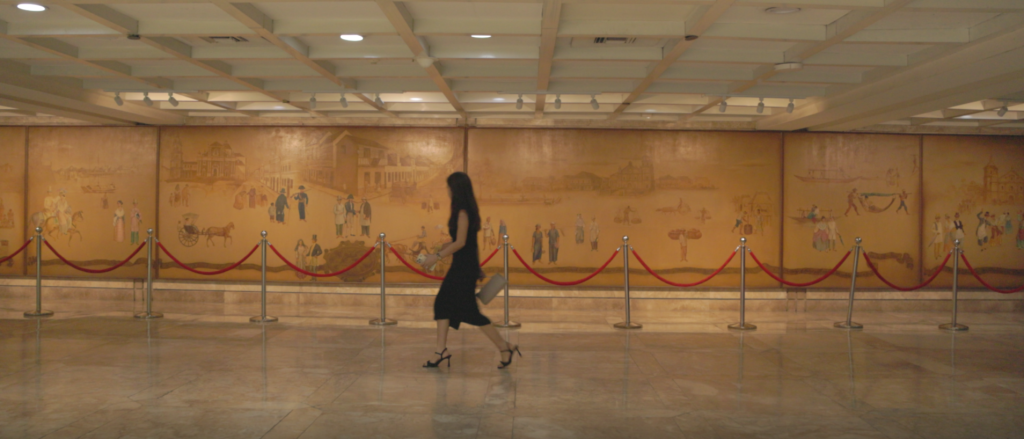
The updates extend beyond the event venues. Throughout the property, spaces have been reconfigured to meet current needs while keeping the building’s original framework legible. Operational improvements, including energy-efficient systems and water reuse initiatives, support the same objective: extending the life of a building that still has much to offer.
Set in the midst of the city of movement, the PNB Financial Center offers a different perspective on longevity. Its core is no longer defined by a single function. Through careful adaptation, it continues to participate in the life of the city while remaining unmistakably itself.
Comments are closed